FIBER CONNECTORS
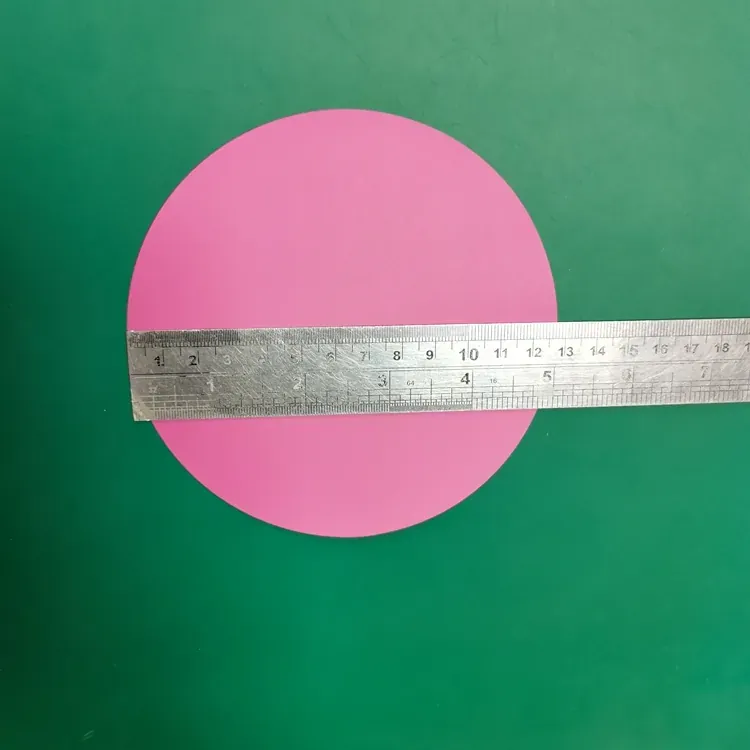
Fiber Optic Polishing Lapping Film
This is a precision fiber-optic lapping film for polishing connector ferrules and cleaved fiber ends to a flat, low-loss optical surface.
Specifications
- Type
- Testers &Tools
- Certification
- RoHS
- IP rating
- IP68
- Operating Temperature
- -55~80Degree
- Color
- Pink
- Use
- FTTH
Fiber Optic Polishing Lapping Film
This is a JINSHANG TECH precision lapping film (polishing paper) used to finish the end face of plastic and glass optical fiber after cleaving, producing a smooth, low-loss optical surface.
JINSHANG TECH supplies the unit as a production item; fiber diameter, jacketing, connectorization and length can be confirmed against the specification before ordering.
Key Characteristics
- Operating temperature range: -55~80Degree
- IP68 ingress protection for damp or wash-down environments
- Certified to RoHS
- Suitable for plastic, hard-clad and large-core silica fiber ferrules
- Compatible with the final polishing step before connector assembly
- Supports quick field repair without powered polishing equipment
- Supplied as a reusable multi-sheet pack for production runs
- Controlled, uniform micron abrasive for a repeatable end-face finish
Typical Applications
The unit is commonly used for field and factory termination of POF/HCS connector ferrules, repair and re-polishing of previously terminated fiber ends, and low-loss optical links in industrial and audio assemblies. The result is a reliable, repeatable build that tolerates the routing, vibration and repeated handling typical of production installations.
Frequently Asked Questions
Q: What is lapping film used for in fiber termination? A: After the fiber is cleaved, lapping film polishes the end face to a flat, smooth surface so light crosses the joint with minimal insertion and return loss.
Q: Which grit/grade do I need? A: Coarser grades remove cleave marks quickly; finer grades (such as 3 um) give the final optical finish. Follow the connector maker's recommended polishing sequence.
Q: Can it be used on plastic optical fiber? A: Yes — POF and HCS ferrules are commonly hand-polished with these films, using light pressure to avoid rounding the end face.
Q: Is it a powered process? A: No. These sheets are designed for hand polishing on a pad or glass plate, making them practical for field service.
For the matching Versatile Link and HFBR assemblies, visit the FEV Electronics fiber catalog at www.fevelectronics.com.